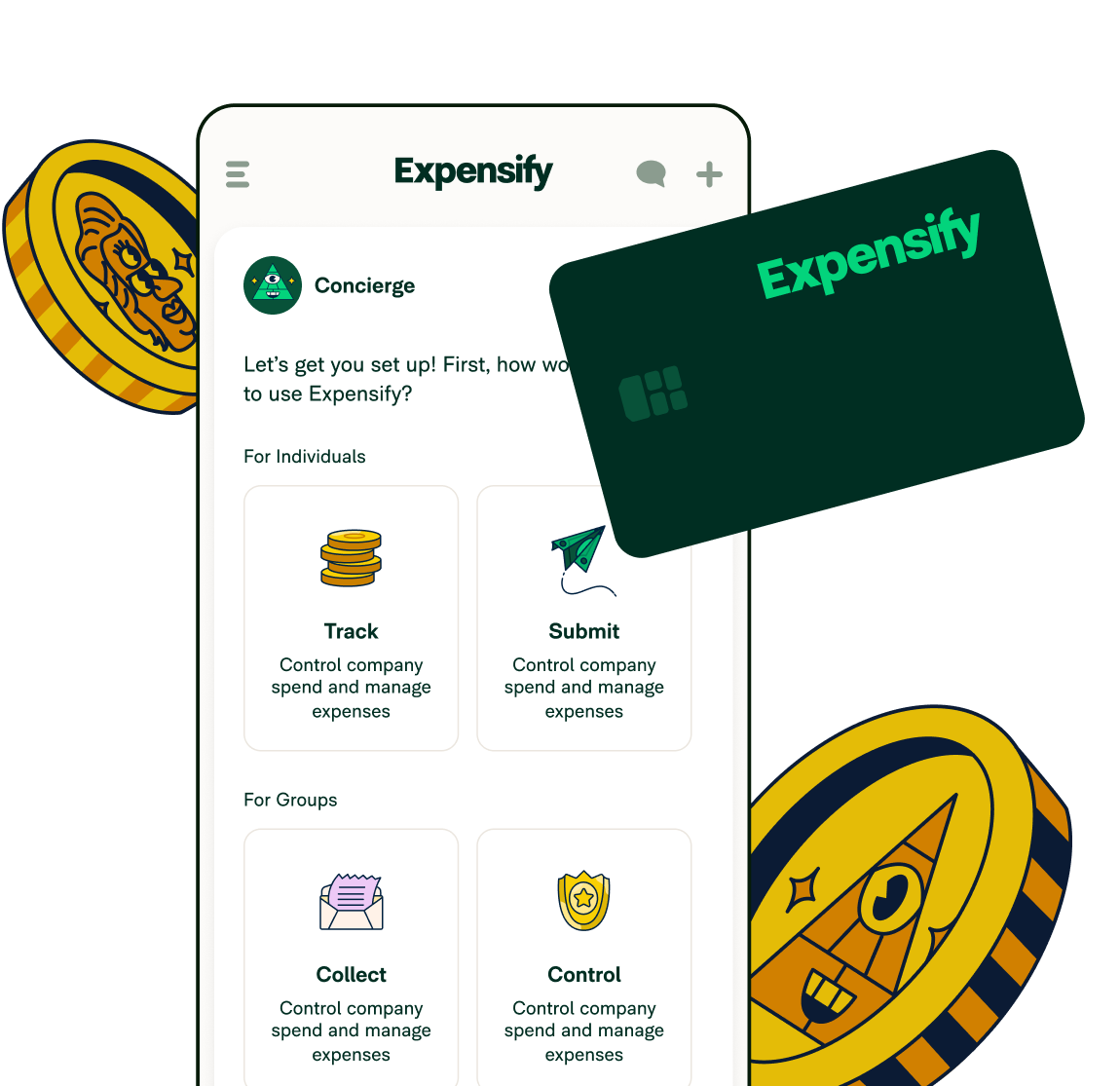
Top 5 travel and expense management software platforms for 2026

The best corporate travel expense management software handles booking and expenses in the same system, so a trip booked on Monday becomes a categorized expense report without anyone rekeying it. The alternative is running a booking tool and an expense tool separately, then reconciling the two after every trip.
Sales heads to Chicago, the marketing director flies to London, developers go to Austin, and finance spends the following week matching receipts to card charges. The platforms below take different approaches to closing that gap.
Key takeaways
- Travel and expense platforms split into two groups: those that handle booking and expenses in one system, and those that book only and hand off to a separate expense tool.
- Global business travel spending is forecast to reach a record $1.71 trillion in 2026, up 7.2%, while trip volume rises just 1.3%.
- Expensify Travel books flights, hotels, cars, and rail at $15 per trip, and every booking becomes an expense automatically.
- Running booking and expense separately means an integration to maintain and reconciliation that happens weeks after the trip ends.
- Test the expense side of any platform before signing, since that is where most of the finance team's time actually goes.
The top travel and expense management platforms in 2026
Two terms get used interchangeably here, and the difference matters when comparing vendors.
What is corporate travel management software? The full system that plans, books, and tracks employee travel, centralizing arrangements, automating expense reporting, enforcing company travel policies, and reporting on spend.
What is a corporate travel management app? The mobile half of that same system, built so employees can book trips, get realtime alerts, and submit expenses from a phone instead of a desktop dashboard.
Most vendors sell both, though few do both equally well. Some are booking platforms with expense bolted on, others are expense platforms that added booking. That split is what the comparison below is measuring.
| Expensify | SAP Concur | Emburse | Perk (formerly TravelPerk) | Egencia by Amex GBT | |
|---|---|---|---|---|---|
| Pricing | $15 per trip booked | Quote only; modules licensed separately | Quote only; priced by module, user count, and volume | $0 to $299 monthly platform fee plus 3% to 5% per booking | Quote only; management fee plus transaction charges |
| Booking coverage | Flights, hotels, cars, rail | Flights, hotels, cars, rail, plus direct supplier bookings via TripLink | Flights, hotels, cars, booked through a travel service alongside the expense products | Flights, hotels, cars, rail, Airbnb | Flights, hotels, cars |
| Expense management | Built in; bookings become expenses automatically | Built in; licensed as a separate module | Built in; expense is the core product with travel added around it | Sold separately from the travel plans | Not offered; integrates with Concur Expense and others |
| Support and duty of care | Live agents for changes and cancellations; realtime traveler locations and trip chat rooms | Tiered support with faster response at added cost; traveler tracking | Support tier set by contract; guided implementation available | Support on all plans; risk management via International SOS | Agent support alongside self-service; traveler tracking and risk alerts |
| Best for | Companies wanting booking and expense in one system | Large organizations with complex policy and SAP infrastructure | Companies that want expense management first with booking added on | Companies keeping the expense tool they already have | Companies wanting negotiated rates and a traditional TMC relationship |
#1 Expensify Travel
Overview
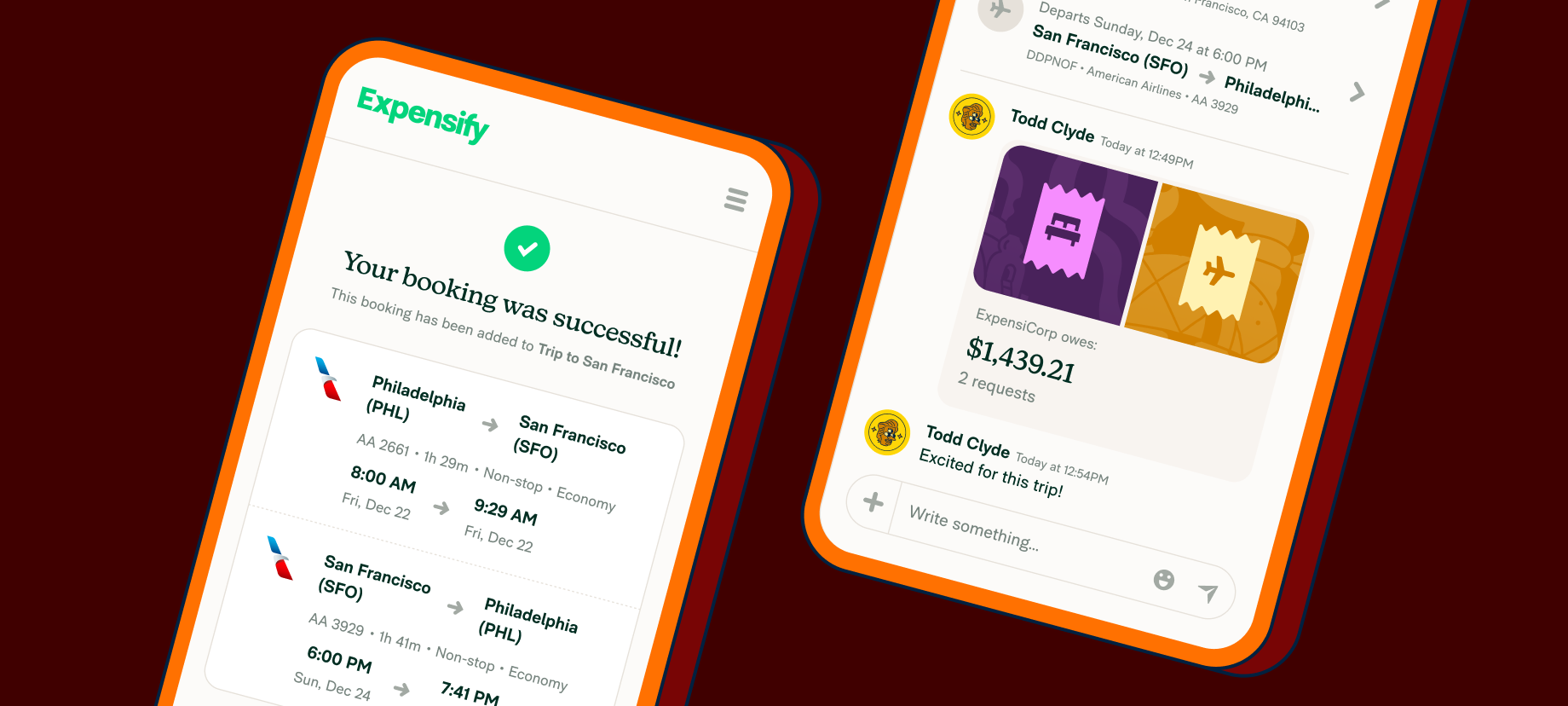
We're putting ourselves first here, so let's be upfront about why. Expensify Travel books flights, hotels, cars, and rail inside the same app that handles expenses, which means a trip booked on Monday becomes a categorized expense report without anyone rekeying it.
That's the part most platforms hand off to an integration. Booking happens in one system, expenses land in another, and finance spends the week after every trip matching the two. Expensify Travel runs on Spotnana's travel infrastructure, so corporate inventory and live agent support sit behind a booking flow nobody needs training to use.
And because we’re chat-first, you get what we call:
Travel and expense at the speed of chat.
We’ve evolved Expensify from just an expense and spend management solution into a comprehensive corporate travel platform that streamlines the entire travel process from booking to reimbursement. The intuitive interface and powerful automation make it particularly appealing to businesses of all sizes looking to simplify their travel operations.
Key features
Booking for flights, hotels, cars, and rail on web, mobile, and desktop
Travel policy rules applied at the point of booking, so out-of-policy options are flagged or hidden before anyone books
Automatic expense creation, with a separate expense and receipt for each trip item, including add-ons like seat fees
SmartScan receipt capture and matching against card transactions
Trip chat rooms connecting travelers and travel managers for realtime changes
Duty-of-care reporting with realtime traveler locations
Loyalty program support, plus guest booking without an Expensify account
Sync to QuickBooks, NetSuite, Xero, and Sage Intacct after approval
Mobile-first experience with offline capabilities
Pricing
Expensify Travel costs $15 per trip. One trip covers all related bookings for the same journey, so a round-trip flight, hotel, and rental car in the same city count as one charge rather than three.
Booking with the Expensify Visa® Commercial Card earns 1% cash back, or 2% for companies spending $250,000 or more per month across cards. Travel sits on top of an Expensify plan, priced per member, per month.
Pros
Flat per-trip pricing rather than a percentage of fare value
Seamless integration between travel booking and expense management
Bookings become expenses automatically, which removes post-trip reconciliation
Flexible policy controls adapt to different employee levels
Cons
Some advanced features are only available in higher-tier plans
The trip fee is a direct cost, where some competitors fund booking through supplier commissions instead
Who it's for
Expensify is ideal for small- to medium-sized businesses seeking an all-in-one solution for travel and expense management. It's particularly well-suited for companies with frequent travelers who need a mobile-friendly platform that works reliably on the go. Less of a fit for organizations locked into an existing TMC relationship, though the expense side still works alongside one.

#2 SAP Concur
Overview
SAP Concur is the enterprise incumbent in travel and expense, and the platform most large organizations are already running when they start evaluating alternatives. It sells as separate modules for Expense, Travel, Invoice, and Request, licensed in whatever combination a company needs.
Concur handles multi-entity structures, country-specific compliance, and approval chains that other platforms can't model, which is why it holds the enterprise segment. Getting there is a project rather than a signup.
Key features
Booking for flights, hotels, cars, and rail, with policy enforcement applied at the point of booking
TripLink capture of bookings made directly with suppliers outside the platform
Configurable approval workflows supporting multiple policies and country-specific travel requirements
Corporate card feeds, receipt capture, and audit workflows through Concur Expense
Integration with SAP S/4HANA and other major ERPs
Duty of care and traveler tracking
Global support coverage
Pricing
SAP does not publish list pricing. Modules are quoted separately based on organization size and product mix, and implementation is a distinct professional services engagement. Concur sells implementation in Standard and Professional versions, with the difference driven by how much configuration a deployment needs.
Pros
Configurable policy and compliance controls, including country-specific requirements
Supports multi-entity and multi-country structures
Integrates with SAP S/4HANA and other major ERPs
Global support coverage
Cons
Implementation is a project with professional services attached, not a self-serve setup
No published pricing, so budgeting requires going through sales
More configuration surface than most small and mid-sized companies will use
Travel and expense are separate modules, so both have to be licensed to get the full workflow
Who it's for
Large organizations with complex approval chains, multiple legal entities, or existing SAP infrastructure. Companies with substantial travel budgets get the most out of the control and reporting depth, which is also what makes it heavy for smaller teams.
Read more: Expensify vs. Concur: Which is a better fit?
#3 Emburse Travel
Overview
Emburse is an expense management platform that added travel booking around its core products, rather than a travel platform that grew into expenses. It sells as modules covering expense, corporate cards, accounts payable, and travel, with travel booking offered as a service alongside the expense products.
The product line spans SMB through enterprise under several names, including Emburse Professional and Emburse Enterprise, which is a legacy of the Certify and Chrome River products the company consolidated. That range is useful if a company grows into a different tier, and it means the interface and feature set vary depending on which product a buyer lands on.
Key features
Receipt capture with optical character recognition and automated expense report creation
Corporate card issuing with configurable spending rules, physical and virtual
Approval workflows and policy compliance automation
Travel booking for flights, hotels, and cars, available alongside the expense products
Accounts payable and invoice processing as a separate module
Analytics dashboard covering expense and card spend
Guided implementation with an assigned specialist
Pricing
Emburse does not publish list pricing. Quotes are built from module selection, user count, transaction or booking volume, and contract term, with card programs sometimes priced on a percentage of spend. A 30-day free trial is available on Emburse Spend.
Pros
Expense management is the mature core of the platform, not an addition
Card issuing with granular spending controls is built in
Product tiers cover SMB through enterprise
Guided implementation is included on some plans
Cons
Travel booking is layered onto expense products rather than built as a travel platform
Multiple products under different names make it harder to tell what a given quote covers
No published pricing, so comparison requires going through sales
Percentage-of-spend pricing on card programs makes costs harder to forecast
Who it's for
Companies that want expense management and corporate cards as the primary system, with travel booking added on. Less suited to organizations where booking volume is the main driver, since travel is not the center of the product.
Read more: Expensify vs Emburse Professional
#4 Perk (formerly TravelPerk)
Overview
Perk is a booking-first travel platform with a large inventory and flexible cancellation options, and it rebranded from TravelPerk in late 2025. Spend management is sold as a separate product rather than bundled into the travel plans.
The model assumes companies already have an expense tool they intend to keep. Perk integrates with Expensify, NetSuite, and Xero, so trips booked in Perk report into whatever system a finance team already runs.
Key features
Booking for flights, hotels, cars, and rail, including low-cost carriers and Airbnb listings
FlexiPerk add-on allowing cancellation up to two hours before a trip with 80% of the fare returned
VAT recovery tooling on paid plans
Travel policy configuration, capped by plan tier
Approval workflows and budget controls by cost center
Travel risk management through an International SOS partnership
Integrations with external expense and accounting systems
Pricing
North American plans run $0 per month on Starter, $99 on Premium, and $299 on Pro, each carrying a per-booking fee of 5% on Starter and 3% on the paid tiers. European pricing follows a per-user model starting around $11 per user per month. Spend management is priced separately from the travel plans.
Pros
Wide inventory including low-cost carriers and Airbnb
Refundable booking option through FlexiPerk
Works with an existing expense system rather than replacing it
VAT recovery tooling built into paid plans
Cons
Percentage-based fees mean cost scales with fare value, so expensive international itineraries cost more to book
Expense management is a separate purchase, not part of the travel plans
Policy configuration is capped by tier, with one policy on Starter and up to ten on Premium
Pricing structure differs between North America and Europe
Who it's for
Companies that want booking depth and intend to keep the expense tool they already have. The percentage fee structure suits occasional travel more than high-volume programs with expensive fares.
#5 Egencia by Amex GBT
Overview
Egencia is a corporate booking platform owned by American Express Global Business Travel, which acquired it from Expedia Group in 2021. It pairs self-service booking with a traditional travel management company relationship, including negotiated supplier rates.
Egencia does not sell an expense product. Trip data flows into whatever expense system a company runs, including a direct connection to Concur Expense.
Key features
Booking for flights, hotels, and cars through Amex GBT's supplier network
Access to negotiated corporate rates
Egencia AI, introduced in 2026, handling bookings and trip changes conversationally, with a Microsoft Teams connection
Traveler tracking and risk alerts
Policy enforcement and approval workflows
Reporting on travel spend and program performance
Agent support alongside the self-service platform
Integrations with external expense platforms, including Expensify
Pricing
Egencia does not publish list pricing. Contracts are typically structured as a management fee plus transaction charges, with terms varying by travel volume and how much agent service is included.
Pros
Access to negotiated rates through Amex GBT's supplier network
Traveler tracking and risk alerting for duty-of-care programs
Global service coverage, extended further by Amex GBT's acquisition of CWT
Combines self-service booking with agent support
Cons
No native expense management, so a separate platform is required
No published pricing, so comparison requires going through sales
Contract structure suits established travel volume more than occasional booking
Adding a separate expense tool means an integration to maintain between two systems
Who it's for
Established companies with significant travel volume that want negotiated rates and a traditional TMC relationship alongside self-service booking. Requires an existing expense platform, so it fits organizations already committed to one.
Key features of corporate travel management software and app (What to look for)
Shopping for travel software without knowing what features matter is like browsing smartphones based solely on color. You might end up with something that looks cool, but it can't handle your actual needs. The right features transform an expensive digital tool into a genuine productivity engine.
Here are the capabilities that separate game-changing platforms from fancy but frustrating alternatives:
Booking and reservations
Look for platforms that provide comprehensive inventory access, competitive rates, and a streamlined booking experience. The best systems allow booking across multiple channels (air, hotel, car, rail) in a single interface.
Expense tracking
Seamless integration between travel booking and expense reporting eliminates duplicate data entry and reduces errors. Features like automated receipt capture and categorization can save hours of administrative work per traveler each month.
Reporting and analytics
Robust analytics help identify savings opportunities, monitor policy compliance, and track travel program performance. Look for customizable dashboards that provide both high-level insights and the ability to drill down into specific details.
Integration with other tools
Your travel management system should integrate with existing business tools, including popular accounting software, HR systems, and communication platforms. This connectivity ensures data flows smoothly between systems and eliminates information silos.
Mobile accessibility
With business travelers constantly on the move, comprehensive mobile capabilities are essential. Look for features like offline access, realtime alerts, and the ability to make changes on-the-go.
Challenges in implementing corporate travel management software
Even the most powerful travel management platform won't deliver magic results overnight. Like any significant tech upgrade, you'll face some bumps along the implementation highway. Understanding these potential roadblocks before you start can help you navigate around them rather than crashing into unexpected obstacles.
Here are the common challenges you should prepare for, and how successful companies overcome them:
Data security concerns
With corporate travel involving sensitive employee and financial data, security is paramount. Ensure any solution you consider meets industry security standards and complies with relevant data protection regulations.
Integration with existing systems
Implementing new travel software often requires integration with accounting, HR, and other business systems. Evaluate the compatibility of potential solutions with your existing tech stack and the level of effort required for integration.
Adoption and training
Employee resistance can derail even the best implementation. Develop a comprehensive change management plan that includes targeted training, clear communication about benefits, and ongoing support.
How to choose the right platform
Global business travel spending is forecast to reach a record $1.71 trillion in 2026, up 7.2%, while trip volume rises just 1.3% to 1.84 billion, according to the GBTA Business Travel Index. Companies are paying more per trip rather than taking more of them, which is what makes the choice of platform worth getting right.
The decision usually comes down to three questions. How much does your team travel, how many people submit expenses, and do you already have an expense system you intend to keep?
Companies with heavy travel and few expense submitters do well where booking carries no direct cost. Companies where most employees expense regularly find per-user expense pricing adds up faster than per-trip fees.
The other split is whether booking and expense live in one system or two. Two systems means an integration to maintain and reconciliation that happens after the fact. One system means the trip and the expense report are the same record from the start.
Most teams overweight the booking experience during evaluation, because that's the part employees see and demo well. The part that costs finance time shows up later, in the weeks after a trip, when receipts have to be chased and card transactions matched to bookings that happened somewhere else. Whichever platform you pick, test that half of it before you sign.
FAQs about the top travel and expense management platforms
-
The four C's of corporate travel management are Cost, Compliance, Convenience, and Care. Cost focuses on optimizing travel spending through negotiated rates and policy enforcement. Compliance ensures adherence to both company policies and regulatory requirements. Convenience aims to create a seamless booking and travel experience. Care encompasses duty-of-care responsibilities, ensuring traveler safety and wellbeing throughout their journey.
-
The largest travel management companies include American Express Global Business Travel, which now includes both Egencia and CWT, along with BCD Travel and FCM Travel Solutions.
These global players manage billions in travel spend annually and serve multinational corporations.
Technology-first providers like Expensify, Emburse, and Perk have since taken share by combining booking and expense management in software rather than through an agency relationship.
-
Travel management software reduces expenses by enforcing policy compliance at the point of booking, providing visibility into spending patterns, applying negotiated rates, and cutting out-of-policy bookings.
Automating expense reporting removes administrative time on the finance side, and analytics identify where spend concentrates. The largest savings usually come from catching out-of-policy bookings before they happen rather than flagging them afterward.
-
Leading travel management platforms employ robust security measures including encryption of sensitive data, multi-factor authentication, regular security audits, and compliance with regulations like GDPR and CCPA. They maintain secure data centers with redundancy measures and implement strict access controls. Many also provide anonymized reporting options to protect individual traveler privacy while still delivering necessary business insights.
-
Expensify integrates seamlessly with 45+ accounting platforms, making it an ideal travel expense management solution for mid-sized businesses.
Popular accounting integrations include QuickBooks (Online & Desktop), Xero, NetSuite, Sage, Oracle, Workday, and more.
The integration is typically set up in a few minutes, and your finance team can maintain full visibility and control while employees enjoy a streamlined expense submission process.
This eliminates the manual work that often bogs down mid-sized businesses managing travel expenses across multiple team members.
-
Pricing models vary more than the products do. Expensify Travel charges $15 per trip booked. Perk charges a monthly platform fee from $0 to $299 plus a percentage of each booking. SAP Concur, Emburse, and Egencia by Amex GBT all price by custom quote, so budgeting requires going through sales.
-
Yes. Expensify Travel covers flights, hotels, cars, and rail, with policy enforcement at the point of booking, approval workflows, duty of care, and live agent support for changes and cancellations.
Bookings flow straight into expense reports, so travel and expenses stay in one place instead of two. Companies already committed to another booking tool can still run the expense side through Expensify.
-
Expensify handles booking and expenses in one app, which is what separates it from tools that only do one side. Employees book flights, hotels, cars, and rail directly in Expensify, and every booking lands on an expense report automatically.
Realtime receipt capture, mileage tracking, per diem rules, and reimbursement all run in the same system, so nothing has to be matched up by hand after the trip.