Best 0% APR business credit cards – and how to track spending effectively

Most small businesses depend on financing to operate and grow. According to the Federal Reserve's 2026 Small Business Credit Survey, 86% of employer firms regularly rely on financing, with credit cards among the most commonly used tools.
A 0% APR card can be a smart way to manage short-term costs without paying interest, but the promotional period is only part of the picture. Tracking spending, collecting receipts, and reconciling transactions are just as important whether the rate is zero or not.
This guide covers the best 0% APR business credit cards available in 2026, when they make sense, and how to pair them with expense management that actually keeps your finances in order.
Key takeaways
- 0 APR business credit cards can provide short-term, interest-free financing – useful for managing startup costs, large purchases, or uneven cash flow.
- Intro APR periods typically last six to 15 months, after which standard variable rates apply, often 16%–27% or higher.
- The best card depends on fees, rewards, and intro APR length, not just the promotional rate alone.
- Expense tracking is still essential when using any credit card. A 0% rate doesn't eliminate the need for receipts, reconciliation, or spend visibility.
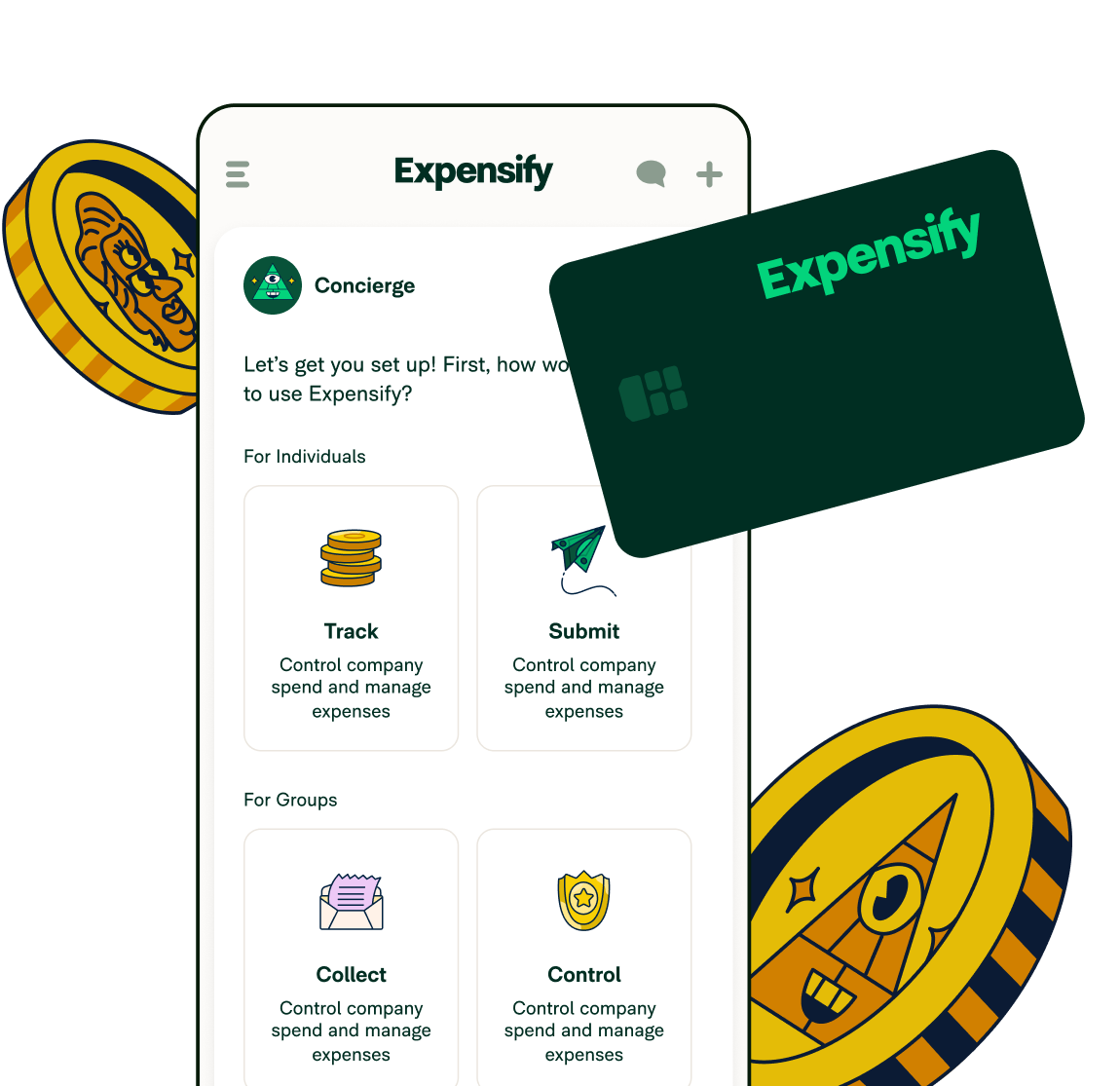
- Expensify helps businesses track credit card spending automatically, whether using the Expensify Card or connecting existing cards via Bring Your Own Cards (BYOC).
What are 0 APR business credit cards?
An introductory APR is a promotional interest rate (usually 0%) that applies for a set period after opening a new account. Business credit cards with 0 APR, sometimes referred to as “business credit cards 0 APR”, work by deferring interest entirely during the promotional window. Purchases don't accrue interest, which means businesses can carry a balance and pay it off over time without any additional cost.
The average business credit card interest rate, and the average APR for new credit card offers, is around 21%, which makes a 0% intro period especially valuable for financing larger purchases or managing short-term cash flow gaps.
The key thing to understand is what happens when the intro period ends: the standard variable APR kicks in on any remaining balance, and that rate can be significant. Businesses that don't pay off the balance before the promotional period expires can end up paying more in interest than they anticipated.
The smart approach is to treat a 0% APR period as a structured financing window. Know when it ends, plan payments accordingly, and don't let the interest-free period create a false sense of security about spending.

Best 0% APR business credit cards in 2026
The best 0 APR business credit cards tend to share a few traits: no annual fee, a competitive rewards rate, and a promotional period long enough to be genuinely useful. All four below fit that profile.*
| Card | Intro APR | Intro period | Regular APR | Annual fee | Best for |
|---|---|---|---|---|---|
| Chase Ink Business Unlimited | 0% | 12 months | 16.74%–24.74% variable | $0 | Flat-rate cash back and simplicity |
| Amex Blue Business Plus | 0% | 12 months | 16.74%–26.74% variable | $0 | Travel rewards points with no annual fee |
| Wells Fargo Signify Business Cash | 0% | 12 months | 16.74%–24.74% variable | $0 | Highest unlimited flat cash back (2%) |
| BofA Business Advantage Unlimited | 0% | 7 billing cycles | 16.74%–26.74% variable | $0 | BofA banking customers with Preferred Rewards |
*Current terms are accurate as of this publication, but subject to change. Always verify directly with the issuer before applying.
Chase Ink Business Unlimited®
This card is a strong default choice for small businesses that want simplicity. It earns 1.5% cash back on every purchase with no categories to track, carries no annual fee, and offers a full 12 months of 0% intro APR on purchases. The welcome offer, which is $750 cash back after spending $6,000 in the first three months, is generous for a no-fee card.
The Blue Business® Plus Credit Card from American Express
This business credit card with 0% APR is the only AMEX card that earns Membership Rewards points with no annual fee. Cardholders earn 2x points on the first $50,000 in purchases each year, then 1x after that. The 12-month 0% intro APR makes it a solid pick for businesses that want to build up transferable travel rewards while financing near-term purchases interest-free.
Wells Fargo Signify Business Cash®
This card earns unlimited 2% cash rewards on all business purchases, which is the highest uncapped flat rate among no-fee cards on this list. The 12-month intro APR and $500 welcome bonus (after $5,000 in the first three months) round out a compelling package for businesses that spend across many categories.
Bank of America® Business Advantage Unlimited Cash Rewards
This business credit card earns 1.5% cash back on all purchases and carries no annual fee, but its intro APR period is notably shorter at seven billing cycles rather than 12 months. That's worth factoring in if a longer financing window is the priority. Where it stands out is for existing BofA customers: the Preferred Rewards for Business program can boost cash back up to 2.62% for eligible members.

When 0% APR business credit cards make sense
Not every business needs a 0 interest business credit card. But for companies managing cash flow gaps, large purchases, or startup costs, interest free business credit cards can be genuinely useful tools. No interest business credit cards work best in three situations.
Managing startup costs
New businesses often face a cluster of upfront expenses like equipment, office setup, marketing, software subscriptions, and inventory, all arriving before revenue is fully established. Business credit cards with no interest turns those purchases into a structured, interest-free repayment window rather than immediate debt at standard rates.
Smoothing short-term cash flow
According to research from QuickBooks, roughly 60% of small business owners report that cash flow has been a problem at some point. If there's a gap between when expenses are due and when revenue arrives, a 0% APR card can act as a bridge without the interest costs of other short-term financing options.
Financing large purchases
For bigger, one-time purchases like hardware, bulk inventory, business travel, or annual software contracts, a 0% intro APR period lets businesses spread payments over several months without paying a premium for the flexibility.
Paying off the balance before the promotional period ends means no interest costs, but that requires a realistic repayment plan from day one rather than an assumption that it'll work itself out.
Pros and cons of 0% APR business credit cards
| Pros | Cons |
|---|---|
| Short-term financing with no interest cost: the full promotional period is available from day one | Standard APR kicks in after the intro period: at 16%–27%+, any balance that carries over gets expensive fast |
| Interest-free breathing room: useful for bridging cash flow gaps without high borrowing costs | Limited intro duration: 7 to 12 months goes faster than it sounds, especially on larger balances |
| Rewards potential: most cards earn cash back or points on top of the 0% intro offer | Risk of accumulating debt: the interest-free window can encourage overspending if there's no repayment plan |
| Spending still requires tracking and reconciliation: a 0% rate doesn't automate expense management or eliminate the operational burden |
That last point is worth sitting with. A promotional rate is a financing decision; it doesn't change anything about how expenses get tracked, documented, or reconciled once the purchase is made. That’s why a business credit card with a 0 interest period is a financing tool, and not an expense management solution.
Why tracking business credit card spending matters
A promotional APR removes interest costs temporarily, but it doesn't remove the operational complexity of managing company spending.
Without proper expense tracking, businesses run into the same problems regardless of their card's rate. Here are some examples:
Lost receipts: missing documentation creates reconciliation problems and potential tax exposure
Delayed expense reports: the longer employees wait to submit, the harder it is to reconstruct what was spent and why
Manual reconciliation: finance teams matching transactions by hand is slow, error-prone, and doesn't scale
Lack of visibility: without realtime spend data, it's hard to catch overspending, flag out-of-policy purchases, or forecast accurately
These issues compound over time, and they exist whether the card has a 0% rate or a 25% rate. Automation is what actually solves them.

How Expensify helps businesses track credit card spending automatically
Expensify is built to remove the manual work from expense management so finance teams and employees spend less time on administrative cleanup and more time on things that matter.
For businesses using any credit card, Expensify handles the full expense management workflow:
Automatic transaction imports – card transactions sync directly to Expensify as they happen, no manual entry required
SmartScan receipt capture – employees photograph a receipt and Expensify automatically matches it to the transaction
Automated expense reports – expenses are categorized and compiled automatically, ready for approval
Approval workflows – multi-level approvals route to the right people based on spend thresholds, without manual routing
Realtime spending visibility – finance teams see an up-to-date view of company spending across all cards, all the time
The result? Fewer errors, faster closes, and no more chasing employees for documentation. (Finance teams rejoice!)
Use your existing credit cards with Expensify (BYOC)
Many expense platforms require businesses to switch to a new card to unlock automation features… but Expensify doesn't.
With Bring Your Own Cards (BYOC), businesses can connect their existing corporate cards – including Chase, AMEX, Wells Fargo, Bank of America, and more – directly to Expensify. You get realtime transaction imports, automated expense reports, and policy enforcement without changing a single card in your wallet.
That means businesses can:
Keep their existing rewards – no need to forfeit cash back or points programs already in place
Avoid operational disruption – employees use the same cards; the back-end changes, not the front-end experience
Track transactions automatically – every purchase imports and categorizes in realtime from day one
For businesses that want to simplify spend management even further, theExpensify Visa® Commercial Card combines built-in expense tracking with up to 2% cash back, and policy enforcement baked in from the start.

Comparing total cost: 0% APR cards vs. the Expensify Card
A 0% APR period removes interest costs temporarily, but the total cost of running a card program goes beyond the rate on the statement.
Total Cost of Ownership (TCO) for business cards includes time employees spend submitting expenses and hunting for receipts, finance team hours reconciling transactions manually, policy violations that go undetected until month-end review, and errors introduced through manual data entry.
While 0% APR cards reduce interest costs during the promotional window, businesses still carry those operational costs, regardless. Here’s a quick rundown:
| Feature | 0% APR business credit cards | Expensify Card |
|---|---|---|
| Interest cost | $0 during intro period; standard APR after | No interest (smart limits enforce spend control) |
| Expense tracking | Manual or requires separate software | Automatic (built in) |
| Receipt collection | Manual submission required | SmartScan captures and matches automatically |
| Reconciliation | Manual or via integration | Automated realtime reconciliation |
| Rewards | Cash back or points (varies by card) | Up to 2% cash back |
| Policy enforcement | Separate policy setup required | Rules enforced at point of purchase |
For many businesses, the operational savings from automation outweigh the short-term financing benefit of a promotional APR period, especially once the intro window closes and standard rates apply.
Choosing the right solution for your business
So, should you sign up for a 0% APR business credit card? The right answer depends on what problem your business is trying to solve.
If the priority is short-term financing such as spreading a large purchase or smoothing a cash flow gap over several months, then a 0% APR business credit card is a legitimate, cost-effective tool.
The Chase Ink Business Unlimited and Wells Fargo Signify Business Cash are the strongest options for most small businesses, combining 12 months of 0% intro APR with competitive rewards and no annual fee.
If the priority is reducing operational overhead like automating expense reports, eliminating manual reconciliation, and giving finance realtime spend visibility, then tools like Expensify deliver that, regardless of which card is used. Connect your existing cards via BYOC, or issue the Expensify Card for the tightest integration between card activity and expense management.
Many businesses end up doing both: using a 0% APR card strategically for planned purchases while running day-to-day expense management through Expensify. The card handles the financing, and Expensify handles the tracking.
Whatever combination makes sense for your business, the goal is the same: spend smarter, track everything, and never let a promotional period create a blind spot in your finances.
FAQs about 0% APR business credit cards
-
Yes. Several major issuers offer 0% introductory APR on business credit cards, typically for 6 to 15 months. The cards covered in this article, from Chase, AMEX, Wells Fargo, and Bank of America, all offer 0% intro APR with no annual fee. After the promotional period ends, a standard variable APR applies to any remaining balance.
-
Most 0% APR promotions on business credit cards last 12 months, though some are shorter. The Bank of America Business Advantage Unlimited, for example, offers just seven billing cycles (roughly seven months).
Also note that most of these cards don't offer a business credit card 0 balance transfer rate as the 0% intro APR typically applies to purchases only, not to balance transfers. Always verify the specific terms directly with the issuer before applying, as promotional periods can change.
-
No single card offers $100,000 at 0% APR. This is a concept that circulates online, but in practice, it involves opening multiple cards across different issuers simultaneously.
Plus, that approach carries real risks: multiple hard inquiries can damage your credit score, juggling repayment deadlines across several cards is easy to mismanage, and missing even one payoff deadline can trigger interest charges that erase any financing benefit.
For businesses with large capital needs, a dedicated business line of credit or SBA loan is typically a more structured and lower-risk option than stacking introductory APR offers.
Learn more about small business financing on the blog – Business line of credit vs credit card: Which is right for your SMB?
-
When the introductory period expires, any remaining balance is subject to the card's standard variable APR, which is typically in the 16%–27% range, depending on the card and the applicant's creditworthiness. Interest charges can accumulate quickly on a large balance, so having a clear repayment plan before the promotional window closes, not after, is essential.
-
The best options automatically import card transactions, match receipts to purchases, and route expenses through an approval workflow without employees having to do much manually. Expensify handles all of this out of the box and works with cards already in use, so there's no need to switch card programs to unlock automation.